
Guide series
Shoulder and Arm VA Claims: Complete Guide Series
Plain-English guides to shoulder and arm VA disability claims: service connection, ratings under Diagnostic Codes 5200 through 5203, rotator cuff tears and impingement, recurrent dislocation and instability, brachial neuritis and nerve ratings, secondary conditions, the C&P exam, and the evidence each claim needs.
Overview
Start here: shoulder & arm basics.
Shoulders take the load in service. Rucks and plate carriers hang from them, overhead work wears the rotator cuff down, and one bad fall or hard landing can start a lifetime of instability. The damage is often silent for years, then shows up as pain reaching overhead, sleeping on that side, or lifting anything above the head.
These guides work through how the VA looks at shoulder and arm conditions using its own regulations: how motion is measured, how the dominant arm changes the percentage, when nerve symptoms are rated separately, and what evidence each theory of service connection needs.

Shoulder Pain and VA Disability: How Service Connection Works
How shoulder and arm conditions are service connected, what the VA does when service records are silent, how the shoulder is rated under 38 CFR 4.71a, and where an independent medical opinion fits.
Read the main guideIn this series
Go deeper on your situation.
 10 min read
Shoulder VA Rating: Diagnostic Codes 5200 to 5203 Explained
How the VA rates shoulder and arm conditions: limitation of arm motion under DC 5201, ankylosis, humerus and clavicle impairment, the dominant arm rule, and painful motion under 38 CFR 4.59.
Read article 9 min read
Rotator Cuff Injuries and VA Disability: Ratings and Evidence
How the VA rates rotator cuff tears, tendinopathy, and impingement syndrome, why these claims are often denied as degenerative, and what the medical evidence has to establish.
Read article 8 min read
Shoulder Dislocation and Instability: VA Ratings Under DC 5202
How the VA rates recurrent shoulder dislocation, labral tears, and humerus impairment under Diagnostic Code 5202, what counts as frequent episodes, and what the record has to show.
Read article 9 min read
Brachial Neuritis and Arm Nerve VA Ratings Explained
How the VA rates brachial plexus and arm nerve conditions under 38 CFR 4.124a, what wholly sensory means for your percentage, and how nerve ratings interact with shoulder and neck ratings.
Read article 8 min read
Shoulder Secondary Conditions: What the VA Recognizes
How secondary service connection works for shoulder conditions under 38 CFR 3.310, including opposite-side overuse, cervical strain, sleep disruption, and aggravation claims.
Read article 8 min read
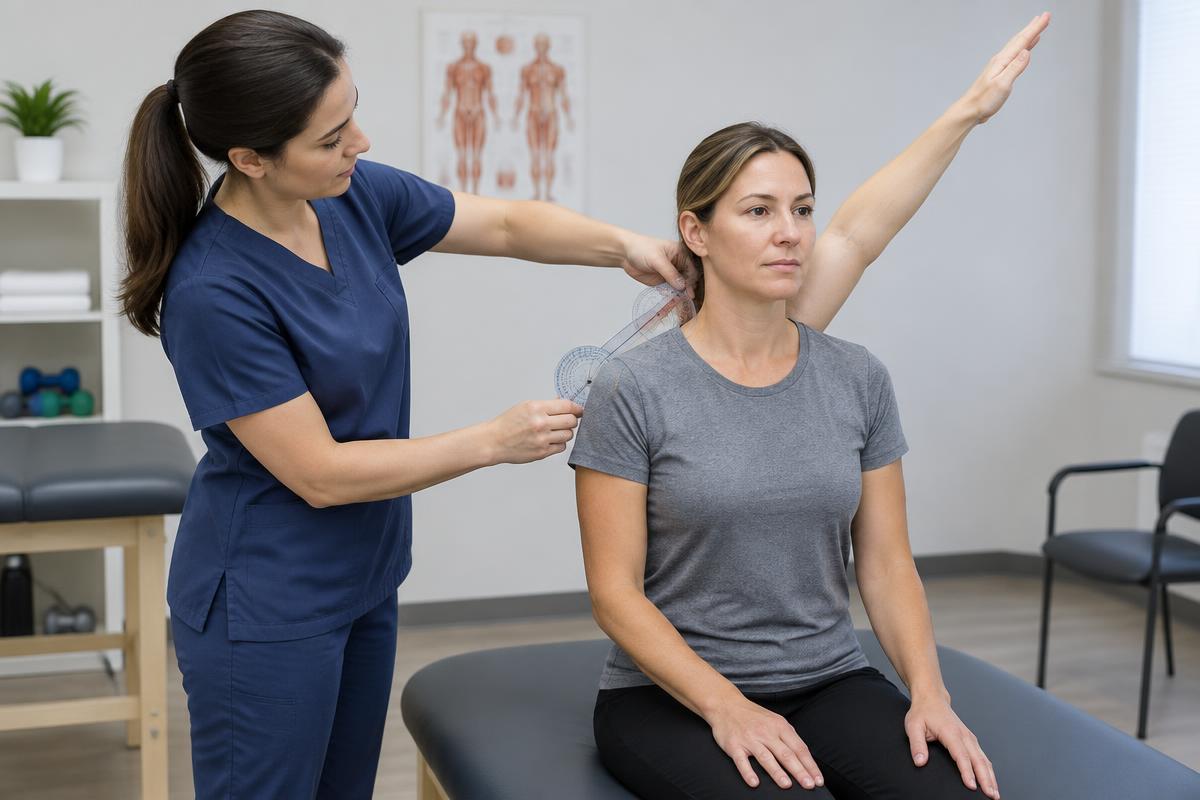
The Shoulder C&P Exam: What the Examiner Measures
What happens at a shoulder Compensation and Pension exam, how range of motion is measured, why flare-ups and repeated use matter, and how to describe a typical day accurately.
Read article 8 min read
Shoulder Claim Evidence: What Belongs in the File
The evidence a shoulder VA disability claim needs, organized by claim element: current diagnosis, in-service event, medical link, and the severity documentation that drives the percentage.
Read article
Talk with a real person about your case.
Call now - our team is happy to help.