
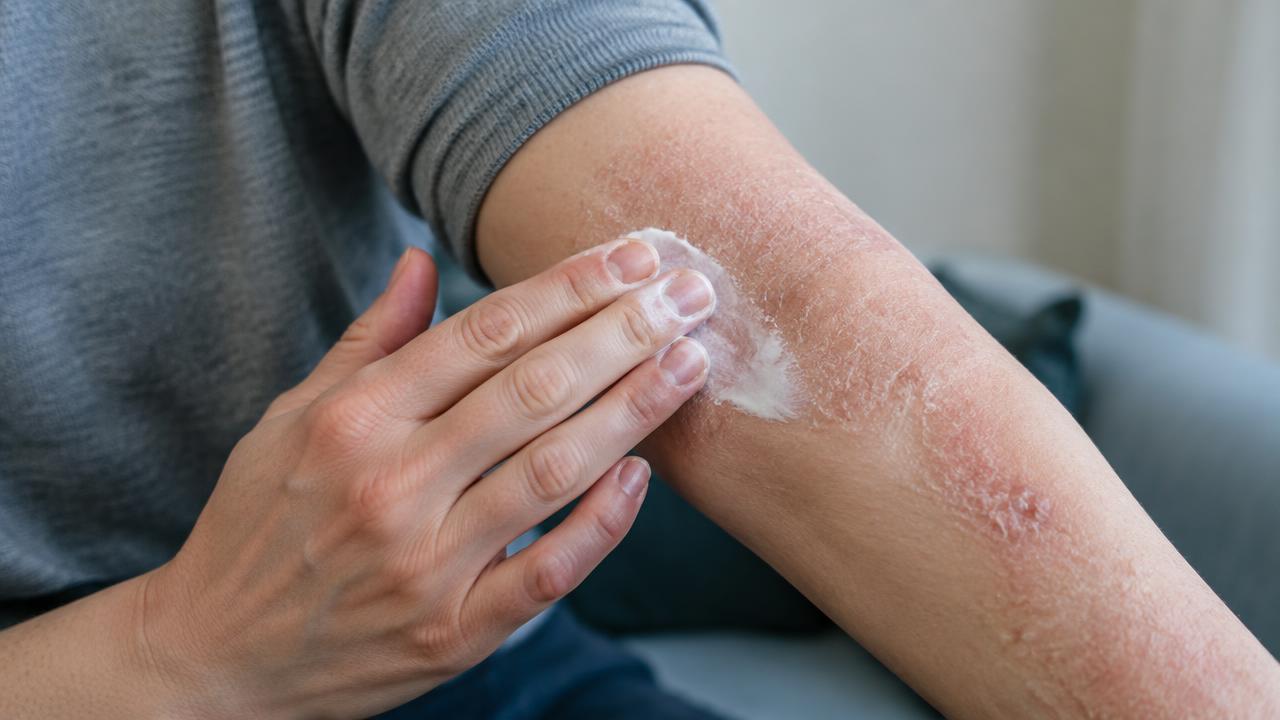

Eczema is the condition most veterans mean when they say they have had a rash since service. Clinically it covers atopic dermatitis, contact dermatitis, and several related inflammatory patterns, and it behaves the same way for most people: long quiet periods punctuated by flares triggered by heat, sweat, stress, detergents, or contact with something irritating.
The VA rates it under Diagnostic Code 7806 in 38 CFR 4.118. Understanding what that code measures is the difference between a 0 percent grant that feels like a denial and a rating that reflects the condition.
What Diagnostic Code 7806 measures
The code looks at two things and takes whichever yields the higher evaluation:
- Coverage - the percentage of the entire body affected, and separately the percentage of exposed areas affected, meaning head, face, neck, and hands
- Treatment - whether the condition requires no more than topical therapy, or requires systemic therapy such as corticosteroids or other immunosuppressive drugs, and for how many weeks during the prior 12-month period
The rating levels
Broadly, the structure runs like this. A noncompensable evaluation applies when less than 5 percent of the body and of exposed areas is affected and no more than topical therapy is required. A 10 percent evaluation applies when at least 5 percent but less than 20 percent of the entire body or of exposed areas is affected, or when intermittent systemic therapy was required for less than six weeks in the prior 12 months.
A 30 percent evaluation applies when 20 to 40 percent of the entire body or of exposed areas is affected, or when systemic therapy was required for a total of six weeks or more, but not constantly, in the prior 12 months. The maximum 60 percent evaluation applies when more than 40 percent of the entire body or of exposed areas is affected, or when constant or near-constant systemic therapy was required.
Read the current criteria directly in 38 CFR 4.118 before relying on any summary, including this one. The skin criteria were substantially revised in recent years and the exact wording controls.
Why the treatment path matters
The treatment path is the one most often overlooked. A veteran whose dermatitis covers a modest area but who has been cycled through oral prednisone twice a year, or placed on an immunosuppressive drug, may qualify at 30 percent on treatment alone even though coverage would only support 10.
That makes the pharmacy record one of the most valuable documents in an eczema claim. Refill histories establish both how long systemic therapy ran and whether it was intermittent or effectively constant. Our evidence guide covers how to assemble that record.
Where veterans start
Every case is different, and there is no obligation at any step. When veterans want to understand what their records actually support, these are the two most common starting points:
- Medical records review
A licensed physician reviews your records for a $250 flat fee and identifies which conditions the available evidence may support. The fee is refunded in full if nothing supportable is identified.
- Nexus letter
When the records support one, a licensed provider writes the medical opinion that addresses the link between your condition and your service or an already service-connected disability.
Measuring coverage honestly
Coverage is estimated at the exam, usually with the rule-of-nines or palm method a dermatologist would use. The problem is that the examiner measures what is visible on the day of the exam. Eczema that covers both arms and the neck during a summer flare may be nearly invisible in February.
38 CFR 4.1 requires the evaluation to reflect the disability over time. That is why dated flare photographs matter more in skin claims than in almost any other category. Take them in good light, include a reference object for scale, and keep the dates. The skin C&P exam guide explains how examiners record coverage.
Service connection for eczema
Rating criteria only matter once service connection is granted. Eczema claims reach that point three ways: directly, when the condition began in service or is linked to an in-service exposure; secondarily, when another service-connected disability or its medication caused or aggravated it; or by aggravation, when a pre-service skin condition worsened beyond its natural progression during service.
The pillar guide on skin conditions and service connection covers the full framework, and the secondary skin conditions guide covers the medication path. If your records are silent on any in-service rash, the reasoning in our back pain with no in-service complaints guide transfers directly.
Scars and other separate ratings
Chronic eczema can leave permanent changes: thickened skin, pigment loss, and scarring from years of scratching or infection. Where those residuals meet separate criteria, they can be rated under the scar codes, subject to the anti-pyramiding rule in 38 CFR 4.14 that prohibits compensating the same disabling effect twice. Our scar rating guide explains how those codes work.
Frequently asked questions
What is the VA rating for eczema?
Eczema and dermatitis are rated under Diagnostic Code 7806 at 0, 10, 30, or 60 percent. The level depends on the percentage of the entire body or of exposed areas affected, or on the type and duration of systemic therapy required during the prior 12 months, whichever produces the higher evaluation.
What counts as an exposed area?
Exposed areas are the parts of the body normally visible: the head, face, neck, and hands. A rash covering a small total body percentage can still support a higher rating if a meaningful share of those visible areas is involved.
Does using a steroid cream count as systemic therapy?
No. Topical therapy applied to the skin is treated differently from systemic therapy, which means treatment that acts on the whole body, such as oral corticosteroids or immunosuppressive drugs. The distinction matters because systemic therapy is what unlocks the 30 and 60 percent levels regardless of coverage.