
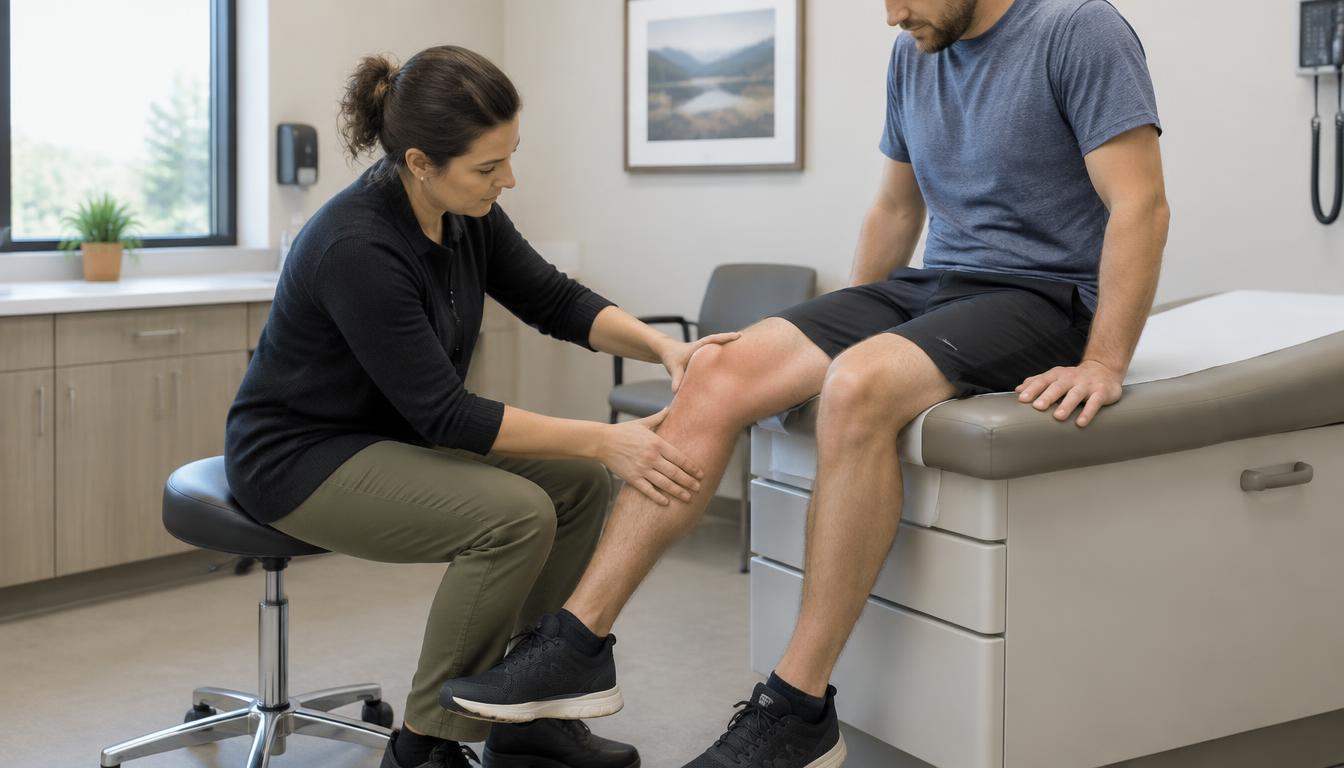

For knee claims, the C&P exam is the rating. The schedule in 38 CFR 4.71a runs on measurements, and the measurements come from that appointment. Knowing exactly what the examiner is capturing - and what they are required to capture - changes outcomes. Our knee ratings guide explains what each measurement is worth, and the instability guide covers what ligament testing decides.
What the examiner measures
The core of the exam is mechanical: flexion and extension measured with a goniometer, ligament testing for laxity and subluxation, evaluation of effusion and locking, and assessment for ankylosis. Each finding maps to a diagnostic code - flexion to 5260, extension to 5261, instability to 5257.
The three range-of-motion readings
A valid musculoskeletal exam does not stop at a single measurement. Under Sharp v. Shulkin and its predecessors, the examiner must address initial range of motion, range after repeated use over the period of the exam, and range during a typical flare-up - or state why those cannot be assessed. If the exam you attend measures only the resting range, an important part of the required evaluation is missing.
Our painful motion and loss of function guide explains these requirements in detail.
How to describe your knee accurately
Preparation is specific, not dramatic. Before the exam, write down:
- Flare-ups: how often, how long, what they feel like, what triggers them
- Repeated use: what happens to the knee after a walk, a workout, a day on your feet
- Giving way: frequency, stairs and uneven ground, falls or near-falls
- Function: how far you can kneel, squat, climb; what you have stopped doing
- Devices: braces, sleeves, canes - and when you use them
Where veterans start
Every case is different, and there is no obligation at any step. When veterans want to understand what their records actually support, these are the two most common starting points:
- Medical records review
A licensed physician reviews your records for a $250 flat fee and identifies which knee conditions the available evidence may support. The fee is refunded in full if nothing supportable is identified.
- Nexus letter
When the records support one, a licensed provider writes the medical opinion that addresses the link between your knee condition and your service or an already service-connected disability.
Guarding and the honest measurement
Many veterans instinctively push through the measurement. Resist it. The regulations direct examiners to account for the pain a veteran could reasonably endure, and describing the point where severe pain begins is the information the rating depends on. An artificially full range with no painful-motion documentation is the most common self-inflicted wound in knee claims.
The DBQ behind the exam
The examiner fills out a joint-specific questionnaire - the Knee and Lower Leg DBQ - with fields for range measurements, instability, flare-up descriptions, and functional loss. Knowing the form exists is useful: it shows what the examiner is supposed to record, and comparing your completed exam against it reveals gaps worth challenging.
When the exam falls short
An exam that omits repeated-use and flare-up assessment, or that contradicts documented history, can be the basis for a supplemental examination request. Review the exam notes once the decision issues, and compare the recorded range against your own measurements and treatment records. Our evidence guide covers what to do next when the exam does not match the record.
Frequently asked questions
What does the examiner measure at a knee C&P exam?
Flexion and extension with a goniometer, instability and ligament laxity, ankylosis, and painful motion. The examiner is also supposed to test range of motion after repeated use over the exam period and describe a typical flare-up.
Should I push through pain at the exam?
No. Pushing through severe pain produces an artificially good range measurement and hides the functional loss the rating depends on. Describe where severe pain begins - that is the information the examiner is required to capture.
What if the examiner never tested repeated use or flare-ups?
That is a gap. Court precedent requires the examiner to address range after repeated use and during flare-ups, or explain why they cannot be assessed. An exam that omits both can be challenged and a supplemental examination requested.
Can I bring anything to the exam?
Bring a written summary: flare-up frequency and severity, what happens after repeated use, giving-way episodes, brace use, stairs avoided, and work effects. Reading from notes keeps the description accurate and complete.