
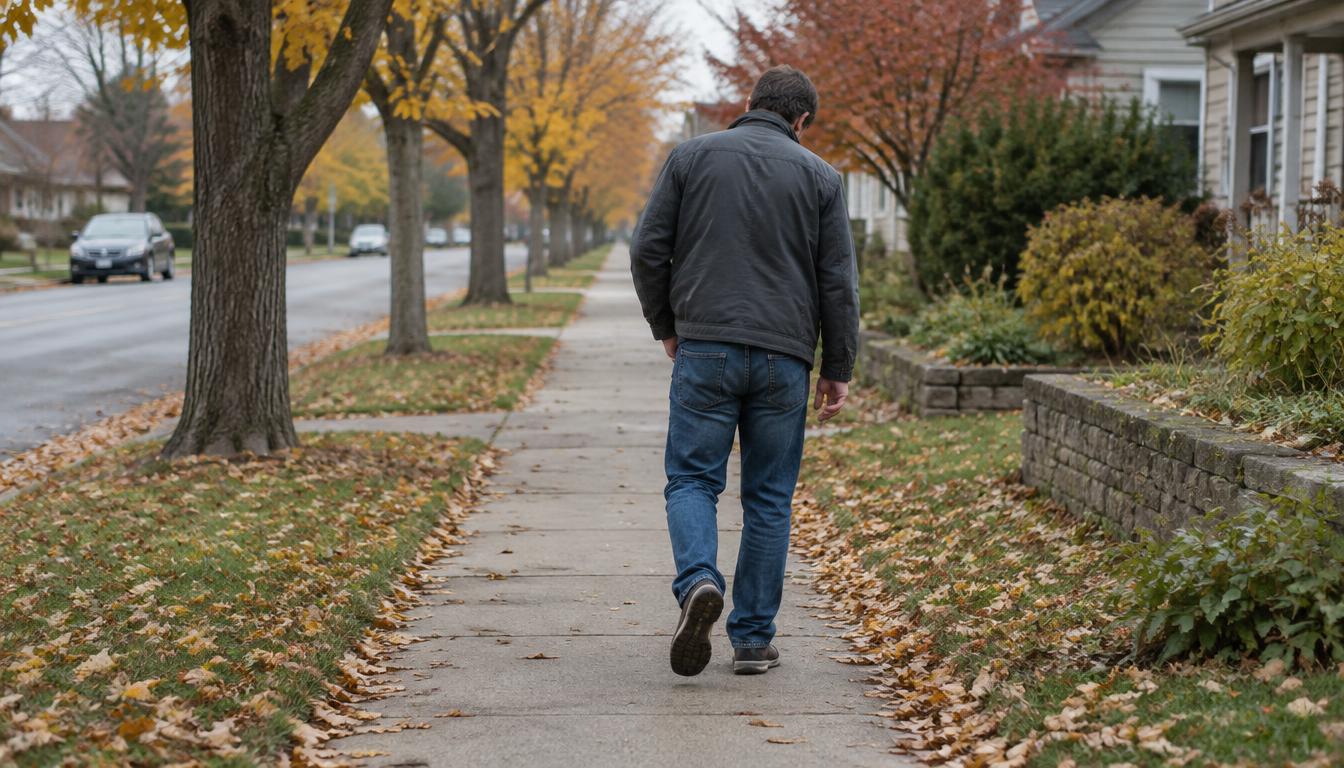

Some knee claims never touch service records at all - because the injury happened in the back. When a service-connected back, hip, or ankle condition changes how a veteran walks, the knee takes loads it was never designed to carry, and years of that altered gait can become its own disabling knee condition.
38 CFR 3.310 permits secondary service connection for a condition proximately due to, or aggravated by, an already service-connected disability. Knee claims are one of the most common places the theory applies.
How altered gait damages knees
An antalgic gait - walking to avoid pain - shortens the stance phase on the painful side and overloads the other. A fused or stiff spine reduces the shock absorption the knee depends on. A hip that cannot rotate normally forces the knee into compensatory twisting. Each mechanism has a medical name, and each can be documented in physical therapy gait observations or a medical opinion.
The same logic runs in the other direction: a service-connected knee can produce back and hip disabilities. See back pain secondary to knee and leg conditions for that direction of the chain.
The opposite knee and the compensation chain
When one knee is painful, the other does double duty. Over years, the compensating knee develops its own degenerative changes - a pattern orthopedic surgeons see routinely, and one that examiners can opine on when the timeline supports it.
Where veterans start
Every case is different, and there is no obligation at any step. When veterans want to understand what their records actually support, these are the two most common starting points:
- Medical records review
A licensed physician reviews your records for a $250 flat fee and identifies which knee conditions the available evidence may support. The fee is refunded in full if nothing supportable is identified.
- Nexus letter
When the records support one, a licensed provider writes the medical opinion that addresses the link between your knee condition and your service or an already service-connected disability.
Mental health, activity, and the knee
Secondary chains are not limited to mechanics. A service-connected mental health condition that reduces activity, contributes to significant weight change, or produces deconditioning can aggravate load-bearing joints. These opinions require specificity - the provider must explain the mechanism and the timeline, not merely note that both conditions exist. Our secondary depression and anxiety guide covers how mental health conditions connect to physical ones.
What the opinion must establish
A secondary claim rises or falls on the medical opinion. It needs to identify the service-connected condition, describe the mechanism connecting it to the knee, address the timeline, and state a conclusion under the at-least-as-likely-as-not standard. Where the theory is aggravation rather than causation, the opinion should also describe the knee's baseline before the aggravation began.
Court precedent holds that the baseline of the service-connected disability is a permanent one - later, natural progression of the underlying condition does not erase the aggravation that occurred along the way.
Evidence that supports the theory
The strongest records show the mechanism in motion: physical therapy notes documenting gait deviations, imaging showing knee degeneration that postdates the service-connected condition, provider observations about compensation, and a timeline the opinion can rest on. Our knee evidence guide covers what to gather.
Frequently asked questions
Can a knee condition be service connected secondary to my back?
Yes, under 38 CFR 3.310. When a service-connected back, hip, or ankle disability changes how a veteran walks, the shifted load can cause or aggravate knee damage. A medical opinion connecting the altered gait to the knee condition is the deciding evidence.
Does the service-connected condition have to affect the same leg?
No. Back and hip conditions on either side alter weight bearing and mechanics for both legs, and the opposite knee frequently compensates for the painful one. What matters is a documented mechanism, not symmetry.
What is aggravation, as opposed to causation?
Aggravation means an already existing knee condition got worse because of the service-connected disability. The comparison is against the baseline the knee had reached before the aggravation began - a permanent baseline that is not reset by later natural progression.
Can a mental health condition support a knee claim?
Indirectly, sometimes. A service-connected mental health condition that reduces activity, contributes to weight change, or leads to deconditioning can aggravate knee joints. The opinion has to explain that chain specifically rather than assert it.