
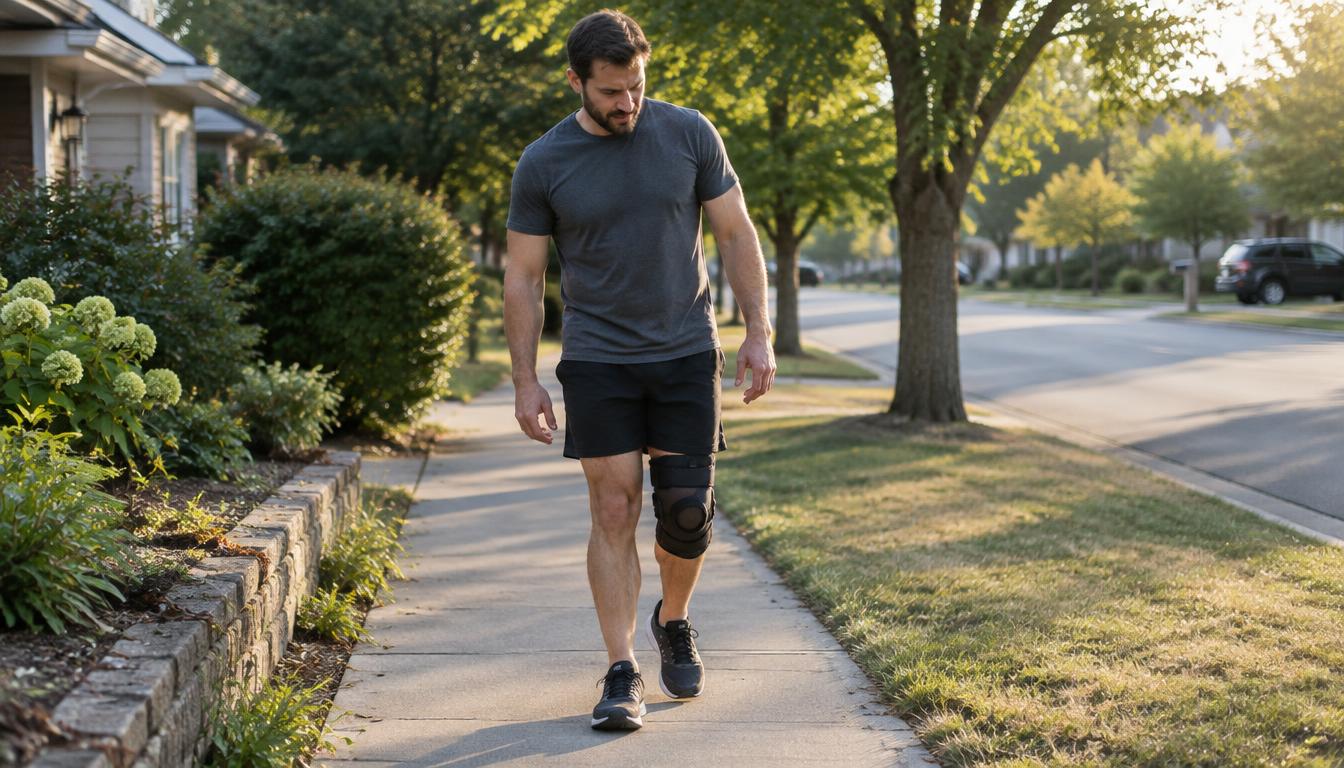

One of the most common back theories in the VA system does not involve the back at all at the outset. A service-connected knee, hip, ankle, or foot condition changes how a veteran walks and bears weight, and over years that altered mechanics loads the lumbar spine unevenly.
This guide explains how the theory works and what the record has to show. For the basics, see how back pain service connection works.
What 38 CFR 3.310 allows
Secondary service connection covers a disability that is proximately due to, or the result of, a service-connected disease or injury. The same regulation covers aggravation: where a service-connected condition makes a non-service-connected condition permanently worse, compensation is available for the degree of worsening.
The practical consequence is that the underlying knee or hip disability must already be service connected - or be granted in the same decision - before the back can be connected to it.
The altered-gait mechanism
The medical reasoning is biomechanical. Pain or instability in one lower extremity shifts load to the opposite side and changes stride length, pelvic rotation, and lumbar posture. Sustained asymmetry increases stress on the lumbar facet joints and discs, which over time is associated with accelerated degenerative change.
An opinion that relies on this pathway should describe the specific deviation documented in the record - antalgic gait, limp, reduced weight-bearing, use of a cane or brace - rather than asserting altered gait generically.
What the record needs to show
Three pieces do most of the work:
- The service-connected lower-extremity disability and its rating history
- Objective documentation of gait abnormality - examination notes, physical therapy assessments, assistive device prescriptions
- A current back diagnosis with imaging or clinical findings
- A medical opinion connecting the documented gait abnormality to the current spine pathology
Where veterans start
Every case is different, and there is no obligation at any step. When veterans want to understand what their records actually support, these are the two most common starting points:
- Medical records review
A licensed physician reviews your records for a $250 flat fee and identifies which conditions the available evidence may support. The fee is refunded in full if nothing supportable is identified.
- Nexus letter
When the records support one, a licensed provider writes the medical opinion that addresses the link between your spine condition and your service or an already service-connected disability.
Aggravation claims and the baseline
Where a back condition already existed, the claim is one of aggravation. 38 CFR 3.310(b) requires the baseline level of severity to be established before the aggravation, generally by medical evidence from the period before the worsening began. Compensation is then for the increment attributable to the service-connected condition.
Records that establish that baseline - earlier imaging, earlier range-of-motion findings - matter as much as current findings in these claims.
The reverse direction, and downstream conditions
The relationship also runs the other way: a service-connected back condition can produce secondary knee or hip strain through compensatory movement, and radicular weakness can affect one leg's function. Neurological involvement is evaluated separately - see radiculopathy and sciatica VA ratings.
Chronic musculoskeletal pain is also a recognized contributor to depressive and anxiety symptoms. Our mental health series covers how those claims are evaluated, and back pain and mental health conditions addresses the pairing directly.
Where these claims fall short
Most denials of altered-gait theories cite the same gap: nothing in the treatment record ever documented an abnormal gait. The theory is medically sound but unsupported on the file in front of the rater. Building the claim usually means collecting the physical therapy and orthopedic records where gait was actually observed and described.
A paid medical records review identifies whether those findings exist in what you already have before a nexus letter is ordered.