

Most veterans searching for a back pain rating are really asking one question: what does the record have to show to reach the next percentage. The answer sits in the General Rating Formula for Diseases and Injuries of the Spine at 38 CFR 4.71a, which applies to Diagnostic Codes 5235 through 5243.
For how these conditions become service connected in the first place, see how back pain service connection works.
The General Rating Formula - thoracolumbar spine
The formula applies with or without symptoms such as pain, whether or not the pain radiates. The criteria for the lower back are:
- 10 percent - forward flexion greater than 60 but not greater than 85 degrees; or combined range of motion greater than 120 but not greater than 235 degrees; or muscle spasm, guarding, or localized tenderness not resulting in abnormal gait or abnormal spinal contour; or a vertebral body fracture with loss of 50 percent or more of height
- 20 percent - forward flexion greater than 30 but not greater than 60 degrees; or combined range of motion not greater than 120 degrees; or muscle spasm or guarding severe enough to result in abnormal gait or abnormal spinal contour
- 40 percent - forward flexion 30 degrees or less; or favorable ankylosis of the entire thoracolumbar spine
- 50 percent - unfavorable ankylosis of the entire thoracolumbar spine
- 100 percent - unfavorable ankylosis of the entire spine
The cervical spine
The same formula rates the neck on its own scale: 10 percent for forward flexion greater than 15 but not greater than 30 degrees or combined range of motion not greater than 170 degrees; 20 percent for forward flexion greater than 15 but not greater than 30 degrees with the additional criteria met, or muscle spasm or guarding severe enough to produce abnormal gait or contour; 30 percent for forward flexion of 15 degrees or less or favorable ankylosis of the entire cervical spine; 40 percent for unfavorable ankylosis of the entire cervical spine.
The neck and the lower back are separate segments and are rated separately. Neck conditions also matter to headache claims - see migraines secondary to neck conditions.
Normal range of motion
The regulation sets the baselines the measurements are compared against. For the thoracolumbar spine, normal forward flexion is 0 to 90 degrees, extension 0 to 30, left and right lateral flexion 0 to 30 each, and left and right rotation 0 to 30 each - a combined normal of 240 degrees. Measurements are rounded to the nearest five degrees.
Where veterans start
Every case is different, and there is no obligation at any step. When veterans want to understand what their records actually support, these are the two most common starting points:
- Medical records review
A licensed physician reviews your records for a $250 flat fee and identifies which conditions the available evidence may support. The fee is refunded in full if nothing supportable is identified.
- Nexus letter
When the records support one, a licensed provider writes the medical opinion that addresses the link between your spine condition and your service or an already service-connected disability.
Intervertebral disc syndrome and incapacitating episodes
Intervertebral disc syndrome may be rated either under the General Rating Formula or under the Formula for Rating Intervertebral Disc Syndrome Based on Incapacitating Episodes, whichever produces the higher evaluation. Our IVDS guide works through that second method in detail.
An incapacitating episode is defined by the regulation as a period of acute signs and symptoms that requires bed rest prescribed by a physician and treatment by a physician. Self-directed bed rest does not count, which is why so many veterans who genuinely spend days flat on their backs receive nothing under this formula.
- 10 percent - episodes totaling at least 1 week but less than 2 weeks in the past 12 months
- 20 percent - at least 2 weeks but less than 4 weeks
- 40 percent - at least 4 weeks but less than 6 weeks
- 60 percent - at least 6 weeks
Flare-ups and functional loss
A single measurement taken on a good day understates most back conditions. 38 CFR 4.40 and 4.45 require consideration of functional loss due to pain, weakness, excess fatigability, and incoordination, including during flare-ups and after repeated use over time. 38 CFR 4.59 provides that painful motion is entitled to at least the minimum compensable rating for the joint.
The practical implication is documentation: a treatment record or symptom log describing what happens during a flare-up gives the examiner something to report. Our C&P exam guide explains how this comes up at the examination.
Separate ratings that combine with the spine
Neurological impairment associated with a spine disability is rated separately under 38 CFR 4.124a and combined under 38 CFR 4.25 - most often sciatic nerve involvement under Diagnostic Code 8520. Bowel or bladder impairment associated with the spine condition may also be separately evaluated.
See radiculopathy and sciatica VA ratings for how those evaluations are assigned, and our VA disability calculator for how separate evaluations combine.
Frequently asked questions
What is a 20 percent VA rating for back pain?
Under the General Rating Formula, 20 percent applies when forward flexion of the thoracolumbar spine is greater than 30 degrees but not greater than 60 degrees, or combined range of motion is not greater than 120 degrees, or muscle spasm or guarding is severe enough to result in an abnormal gait or abnormal spinal contour.
What is the highest VA rating for a back condition?
Under the General Rating Formula, 100 percent applies for unfavorable ankylosis of the entire spine and 50 percent for unfavorable ankylosis of the entire thoracolumbar spine. Higher combined evaluations are usually reached by adding separate neurological ratings under 38 CFR 4.25.
How does the VA measure range of motion?
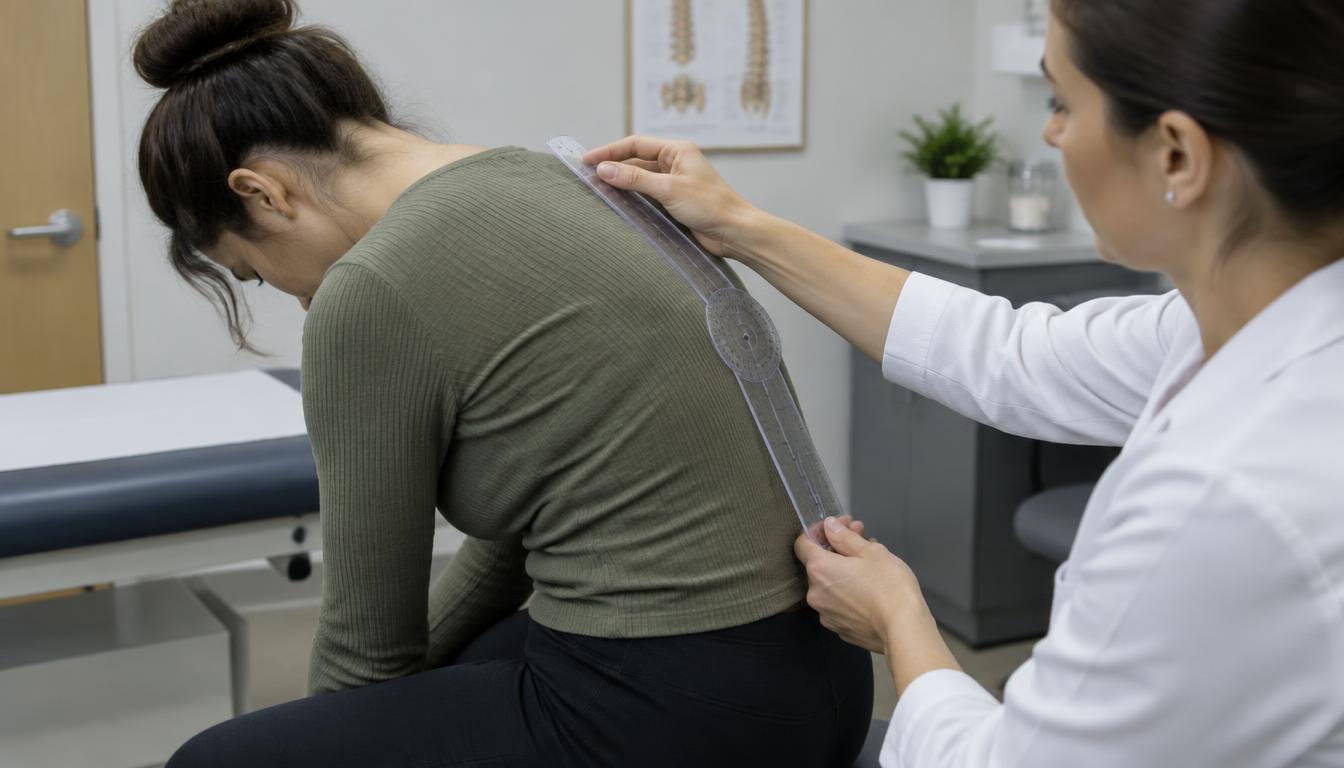
With a goniometer during examination. Normal forward flexion of the thoracolumbar spine is 0 to 90 degrees and normal combined range of motion is 240 degrees, measured as the sum of flexion, extension, left and right lateral flexion, and left and right rotation.