
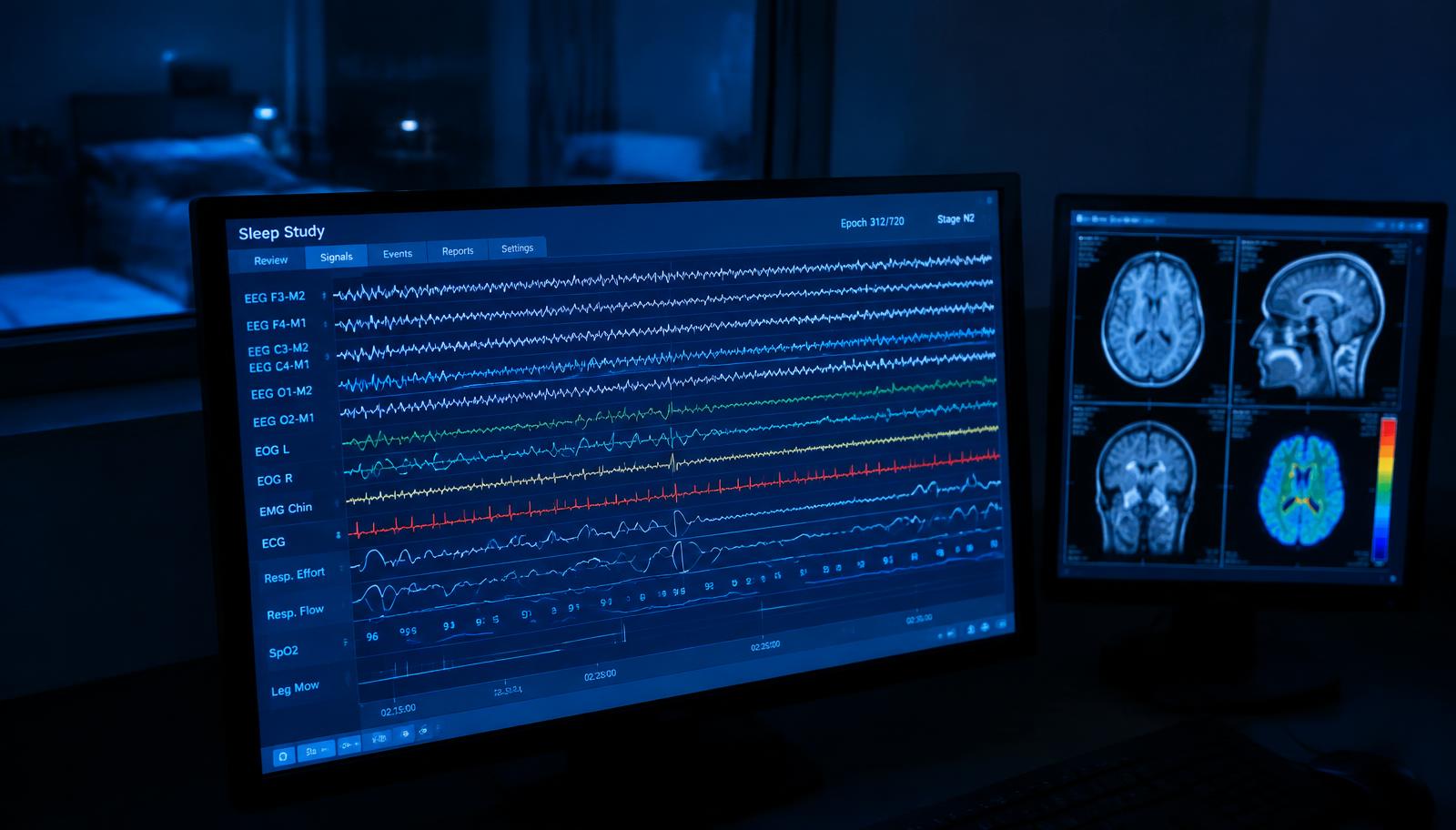

Sleep disruption is one of the most frequently reported residuals after a traumatic brain injury, and one of the least often claimed. Blast exposure, concussion, and closed head injury can affect the brain structures that regulate the sleep-wake cycle, which is why insomnia, excessive daytime sleepiness, and sleep-disordered breathing show up so often in the years after an injury.
What changes after a head injury
- Disrupted sleep architecture, with trouble falling asleep, staying asleep, or reaching restorative sleep
- Shifted circadian rhythm, producing irregular schedules and daytime sleepiness
- Higher rates of sleep apnea, insomnia, hypersomnia, and restless legs
- Worsening of sleep problems that already existed, including those tied to post-traumatic stress disorder
Why the claim is often missed
Sleep complaints after a head injury are frequently attributed to stress or to medication side effects and never separately evaluated. If no sleep study was ordered, the file contains symptoms but no diagnosis, and a rater cannot evaluate a condition that has not been diagnosed. A current diagnosis is the first element of any claim, as described in what is a VA nexus letter.
Where veterans start
Every case is different, and there is no obligation at any step. When veterans want to understand what their records actually support, these are the two most common starting points:
- Medical records review
A licensed physician reviews your records for a $250 flat fee and identifies which conditions the available evidence may support. The fee is refunded in full if nothing supportable is identified.
- Nexus letter
When the records support one, a licensed provider writes the medical opinion that addresses the link between your condition and your service.
Secondary service connection to TBI residuals
When TBI residuals are already service connected, a sleep disorder that resulted from or was aggravated by those residuals can be claimed as secondary under 38 CFR 3.310. The medical opinion needs to explain the mechanism - which residuals, how they affect sleep regulation, and why the timing fits. Migraines after TBI follows the same structure for headache claims, and secondary service connection covers the general standard.
Documenting it
- The record of the in-service injury or blast exposure, however brief
- A current sleep study if sleep-disordered breathing is suspected
- Treatment notes describing sleep complaints over time
- A personal statement and buddy statements describing what changed after the injury
If the sleep condition turns out to be obstructive sleep apnea, sleep apnea and service connection and sleep apnea ratings cover how those claims are evaluated, and nexus letters and increased ratings explains why a rating increase turns on severity documentation rather than another causation opinion. Our records guide lists the documents worth collecting, and a medical records review identifies whether your records support an opinion before you go further.