

Hearing loss claims are common, and they are also commonly mishandled - by veterans who file without knowing what the rating schedule actually measures, and by exam reports that record numbers without context. The result is a long line of service-connected 0 percent ratings and denials that could have been built better the first time.
What decides a hearing loss claim is not how loud you have to turn the television. It is whether the file contains a current diagnosis, a credible noise exposure history, and a medical link connecting them, plus the specific audiometric findings the rating schedule requires.
What the VA requires
Direct service connection under 38 CFR 3.303 has three elements, and hearing claims usually turn on the second and third.
- A current diagnosis - sensorineural hearing loss established by a current audiogram, not by your own description of symptoms
- An in-service event or stressor - hazardous noise exposure from weapons, aircraft, vehicles, engine rooms, or machinery, which the VA concedes automatically for many duty Military Occupational Specialty roles
- A medical link between the two, explained with reasoning rather than asserted in a sentence
The first element comes from an audiogram ordered by a VA or private provider. The second is usually easier for hearing claims than for almost any other condition, because military service is inherently loud and the VA maintains published noise exposure listings by duty assignment. The third is where most claims stall, and it is what our guide to what a nexus letter is describes.
How the VA rates hearing loss
38 CFR 4.85 through 4.87 rate hearing loss under Diagnostic Code 6100, and the formula is one of the most numeric in the entire schedule. The VA measures your pure tone thresholds at 500, 1,000, 2,000, and 4,000 Hz, converts them through the tables in the regulation, measures your word recognition score, and assigns the rating from whichever of the two tables produces the more favorable evaluation.
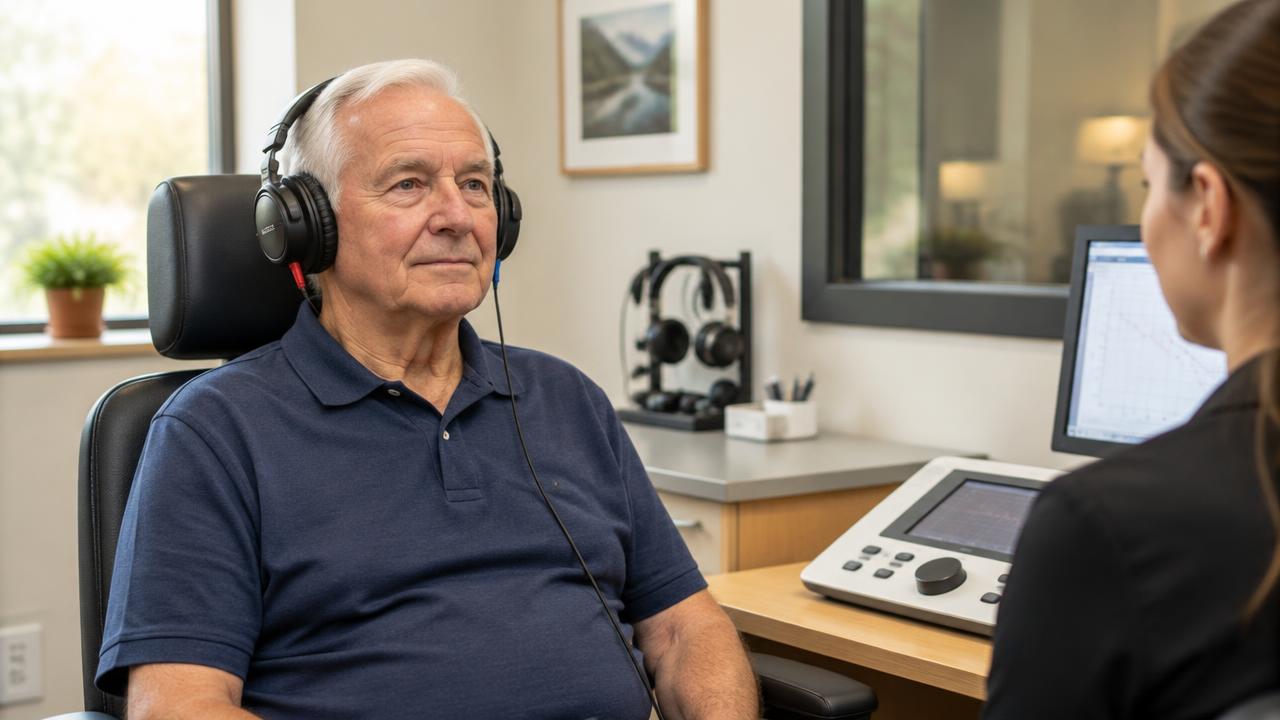
The practical consequence is that the audiogram is the case. Two veterans with the same daily struggles can land at different percentages purely because of where their thresholds fall. Our hearing loss rating guide walks the tables line by line, and our C&P exam guide explains what happens in the exam booth.
The 0 percent rating problem
Many veterans with genuinely difficult hearing receive a 0 percent rating because the thresholds do not cross the compensable lines in the tables. This is frustrating, but it is not a loss - service connection is established permanently, and hearing loss typically worsens over decades, which opens the door to increased rating claims later.
It also matters elsewhere in the math. Service-connected conditions at 0 percent count toward the combined table and can matter in TDIU and extraschedular arguments. The mistake to avoid is treating the 0 percent as final and never filing again as hearing declines.
Tinnitus alongside hearing loss
Tinnitus and hearing loss travel together, because both flow from the same noise damage. They are rated separately - tinnitus under Diagnostic Code 6260 at a maximum of 10 percent, hearing loss under Diagnostic Code 6100 on the audiometric tables - and pyramiding under 38 CFR 4.14 is not an issue because they are distinct codes.
Filing both together is standard practice. Our tinnitus hub covers how tinnitus is diagnosed, rated, and argued, and the noise exposure evidence that supports one usually supports the other.
Noise exposure and secondary paths
The most common service connection path is direct, through noise exposure in service. A second path is secondary service connection under 38 CFR 3.310 - for example, hearing loss caused or worsened by medications taken for a service-connected condition. Our ototoxic medication guide covers that pathway.
Presumptive service connection under 38 CFR 3.309 rarely applies to hearing loss, so the noise exposure evidence carries the claim. Our noise exposure guide explains how duty assignments, audiometric history, and even the absence of complaints in service are handled.
Where an independent medical opinion fits
The VA decides claims on what is in the file. When the file has an audiogram and a noise exposure history but no one has written down why the current hearing loss is connected to service, that gap is the reason for denial, and it is what a well-reasoned independent medical opinion addresses.
No honest provider can promise an outcome. A sound opinion states a clear conclusion, explains the medical reasoning, addresses the alternative explanations the VA will weigh - age-related decline and civilian noise exposure are the big two - and cites the records it relies on. Before spending money on anything, our guide on why VA claims get denied helps identify which element the VA actually found missing.
Where to go next
Read the rating guide for the numbers, the noise exposure guide for proving the in-service element, and the evidence guide for what belongs in the file. Free accredited help with filing is available to every veteran through a Veterans Service Officer.
Frequently asked questions
Can I get VA disability for hearing loss?
Yes. Hearing loss is a commonly granted VA disability when the file contains a current audiological diagnosis, an in-service noise exposure history or event, and a medical link between the two. Once service connected, the VA rates it under 38 CFR 4.85 through 4.87 based on audiometric testing rather than on how hearing loss affects daily life.
What is the VA rating for hearing loss?
Hearing loss is rated under Diagnostic Code 6100 from 0 to 100 percent. The rating comes from tables in 38 CFR 4.85 that combine your pure tone thresholds at 500, 1,000, 2,000, and 4,000 Hz with your word recognition score, and the VA assigns whichever table result is more favorable. Many veterans with real hearing difficulty receive a 0 percent rating because their thresholds and word recognition do not cross the rating thresholds.
Why is my hearing loss rated 0 percent?
A 0 percent rating means the VA accepted service connection but your audiometric findings did not meet the criteria for a compensable rating. It is not a denial, it establishes service connection permanently. Many veterans file for an increased rating later as hearing worsens, and a 0 percent service-connected hearing loss can also matter for TDIU and other combined-rating purposes.
Can I get hearing loss and tinnitus rated separately?
Yes, in most cases. Hearing loss is rated under Diagnostic Code 6100 and tinnitus under Diagnostic Code 6260, and they are distinct disabilities under 38 CFR 4.14. Tinnitus is rated at a maximum of 10 percent on its own, while hearing loss is rated on audiometric findings. Our [tinnitus guides](/topics/tinnitus) cover the tinnitus side in detail.
Do I need an audiogram from service?
No. A separation or entry audiogram helps enormously, and absence of documented in-service hearing complaints does not disprove the claim. The VA publishes duty Military Occupational Specialty noise exposure listings that concede hazardous noise exposure for many roles, and medical literature recognizes that noise-induced hearing loss progresses after exposure ends. Our [noise exposure guide](/articles/hearing-loss-noise-exposure) explains how the in-service element is proven.