
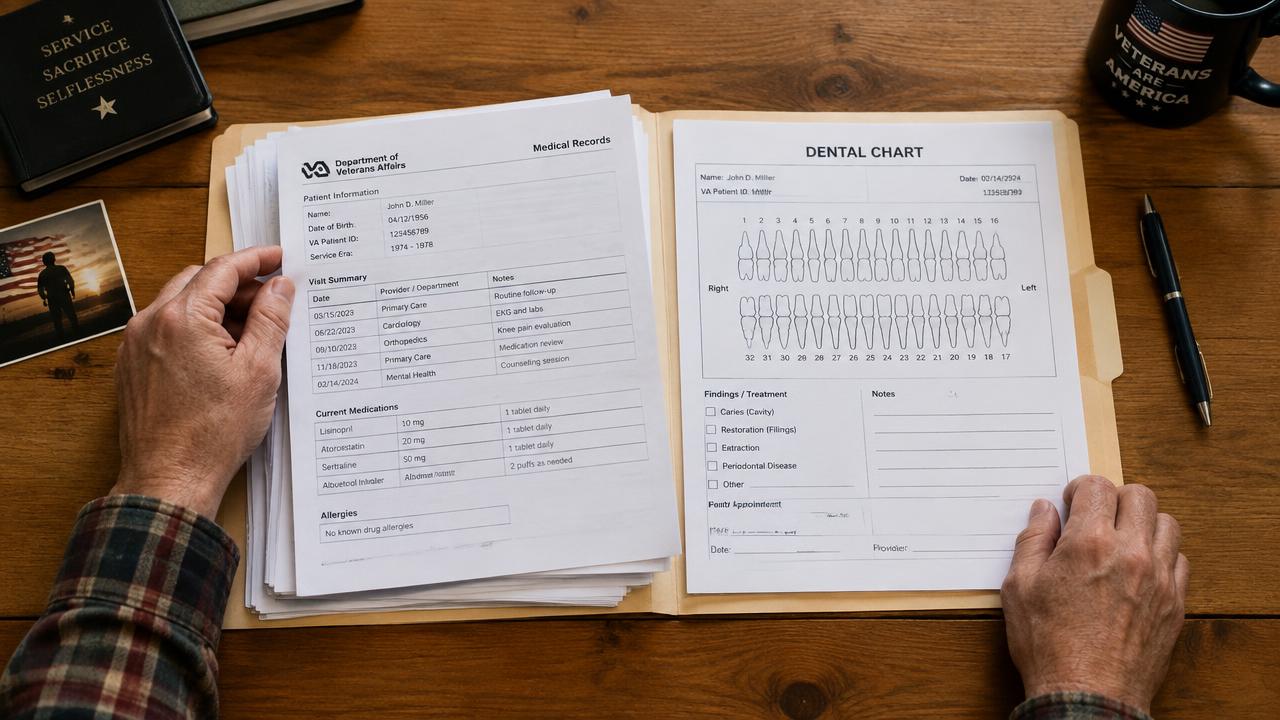

TMJ claims are decided on documents. The VA rates what the file shows, and a file that shows the right things wins more often than a file full of general records. This is the checklist.
The diagnosis
Start with a current diagnosis from a dentist, oral surgeon, or physician. TMJ disorder, internal derangement, disc displacement with or without reduction, degenerative joint disease of the TMJ, or myofascial pain of the masticatory muscles all qualify. Jaw pain without a diagnosis does not.
Imaging strengthens it. Panoramic X-rays, MRI showing disc position, or CT showing joint degeneration convert a clinical impression into objective findings.
The in-service documentation
For direct claims, look for service treatment records mentioning jaw pain, facial injury, dental emergencies, or difficulty chewing, and for line-of-duty or accident reports if there was a specific injury. Sick call silence is not fatal - our pillar guide explains how duty history and credible statements fill the gap - but any paper from the service era is worth more than recollection alone.
The dental records
Dental charts are the hidden strength of jaw claims. Entries noting wear facets, cracked or fractured teeth, abfraction lesions, or muscle tenderness document the grinding and clenching that drive the joint damage. Records of crowns, root canals, and extractions attributed to fracture do the same.
A night guard fitting record deserves special mention. It is dated, objective, and often predates the claim by years, which establishes chronicity better than almost anything else.
Treatment history
Splint therapy, physical therapy referrals, trigger point or botulinum toxin injections for masticatory muscles, and any oral surgery consultations all show severity over time. A continuous treatment history also answers the VA's favorite alternative explanation - that the condition is recent and unrelated to service.
Where veterans start
Every case is different, and there is no obligation at any step. When veterans want to understand what their records actually support, these are the two most common starting points:
- Medical records review
A licensed physician reviews your records for a $250 flat fee and identifies which conditions the available evidence may support. The fee is refunded in full if nothing supportable is identified.
- Nexus letter
When the records support one, a licensed provider writes the medical opinion that addresses the link between your condition and your service or an already service-connected disability.
The dietary documentation
Because the higher rating tiers under Diagnostic Code 9900 combine limited opening with dietary restriction, the file should say what you eat. A provider note recommending soft or mechanically altered foods is ideal. Your own accurate description, and a statement from a spouse or family member who cooks for you, support it.
Lay statements
Statements from people who know you carry real weight when they describe observation rather than diagnosis: the spouse who hears the grinding at night, the friend who has watched you cut food small for twenty years, the family member who was there when your jaw locked. Our guide to medical evidence in VA disability claims covers how lay and medical evidence work together.
The medical opinion
When the diagnosis and the history exist but no one has explained the connection, the opinion is the missing element. A sound opinion states a conclusion, reasons through the mechanism, cites the records relied on, and addresses the alternatives. For secondary claims, our secondary conditions guide lists what it must contain; the broader principles are in what a nexus letter is.
What does not help
Dental bills, photographs of teeth, and assertions that the VA should already know do not move these claims. Neither does a stack of records that never mentions the jaw. Targeted documentation beats volume every time - the VA's own evidence page says the same in its own language.
Where to go next
If the exam has not happened yet, read the C&P exam guide. If you are still deciding how to file, free accredited help is available through a Veterans Service Officer, and the pillar guide ties the whole series together.
Sources
- VA: Evidence to support your VA disability claim
- 38 CFR 4.150 - Schedule of ratings, dental and oral conditions (eCFR)
- 38 CFR 3.303 - Principles relating to service connection (eCFR)
- 38 CFR 3.310 - Secondary service connection (eCFR)
- VA Form 21-0960D-1, Dental and Oral Conditions Disability Benefits Questionnaire