
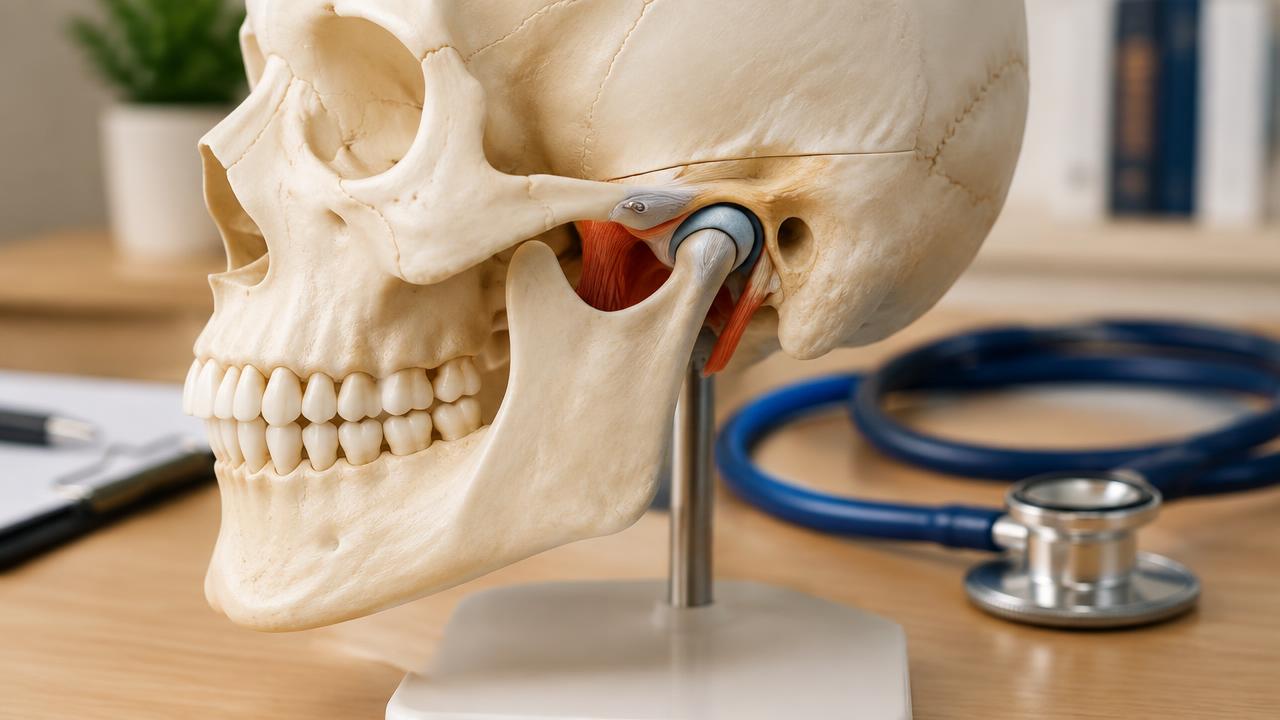

Most veterans searching for a TMJ rating want one answer: what does the record have to show to reach the next percentage. The answer sits in Diagnostic Code 9900 of 38 CFR 4.150, and it is one of the most mechanical criteria in the entire rating schedule.
The code does not rate pain, clicking, or headaches directly. It rates two things: how far you can open your mouth, measured in millimeters, and whether your diet is restricted by the condition.
How jaw opening is measured
Interincisal opening is the distance between the cutting edges of your upper and lower front teeth at maximum opening. Normal opening in an adult is roughly 35 to 50 millimeters, and the rating schedule treats 40 millimeters as the line where limitation begins.
The examiner measures this directly, usually with a ruler or measuring device, and the number recorded is the number the rater uses. An exam report that says only jaw opening is limited without a measurement is a report that can be challenged.
The rating levels
Diagnostic Code 9900 combines opening limits with dietary restriction. The levels, read from the code, work like this:
- 50 percent - interincisal opening limited to 0 through 10 millimeters with dietary restriction to full liquid and pureed foods
- 40 percent - interincisal opening limited to 11 through 20 millimeters with dietary restriction to all mechanically altered foods, or opening limited to 0 through 10 millimeters with restriction to soft and semi-solid foods
- 30 percent - interincisal opening limited to 11 through 20 millimeters with dietary restriction to soft and semi-solid foods, or opening limited to 21 through 29 millimeters with dietary restriction to full liquid and pureed foods
- 20 percent - interincisal opening limited to 21 through 29 millimeters with dietary restriction to soft and semi-solid foods, or opening limited to 30 through 34 millimeters with restriction to full liquid and pureed foods
- 10 percent - interincisal opening limited to 31 through 40 millimeters, or lateral excursion limited to 0 through 4 millimeters
Two things stand out. First, the same degree of limited opening produces very different percentages depending on whether a dietary restriction is documented. Second, the code uses the phrase dietary restriction to mean a restriction prescribed or necessitated by the condition, not a preference for soft food.
Why the dietary tier matters so much
A veteran with opening limited to 25 millimeters rates 20 percent if the file documents a soft-food restriction, but a different outcome if the file is silent on diet. This is where many TMJ ratings are decided, and where they are most often understated.
If your provider has told you to avoid hard, chewy, or tough foods, that belongs in your treatment records. If your spouse or family can describe what you actually eat, that lay evidence supports the picture. The rating schedule can only apply what the file contains, which our evidence guide expands on.
Where veterans start
Every case is different, and there is no obligation at any step. When veterans want to understand what their records actually support, these are the two most common starting points:
- Medical records review
A licensed physician reviews your records for a $250 flat fee and identifies which conditions the available evidence may support. The fee is refunded in full if nothing supportable is identified.
- Nexus letter
When the records support one, a licensed provider writes the medical opinion that addresses the link between your condition and your service or an already service-connected disability.
Lateral excursion
Side-to-side jaw movement has its own criterion: lateral excursion limited to 0 through 4 millimeters rates 10 percent. This is measured separately from opening and is frequently skipped at exams. If your jaw barely moves side to side, make sure the examiner actually measures it.
Painful motion and functional loss
Even where opening is not severely limited, 38 CFR 4.40 and 4.45 require the rating to account for functional loss from pain on use and during flare-ups, and 38 CFR 4.59 addresses painful motion. A jaw that opens to 38 millimeters but locks, catches, or causes pain with chewing is not necessarily a 0 percent jaw.
Under 38 CFR 4.1 the rating must reflect the disability over time. Describing your average and worst days, not just what you can force in the exam room, is how that rule gets applied in practice.
Pyramiding and other jaw codes
You cannot be rated twice for the same jaw limitation. 38 CFR 4.14 prohibits pyramiding, so the VA assigns one code for the dominant disability picture. Veterans with old jaw fractures are sometimes rated under the fracture codes instead - our jaw fracture guide covers those - and the rater picks whichever produces the higher, more accurate evaluation.
Where to go next
Before your exam is scheduled, read the TMJ C&P exam guide so you know what gets measured. If your TMJ follows a service-connected mental health condition, the secondary conditions guide covers that path. And the pillar guide ties the whole claim together.