Bruxism - chronic clenching and grinding of the teeth - is one of the most searched terms in this space, and one of the most misunderstood. Veterans are told by dentists for years that they grind their teeth, sometimes with cracked molars and worn enamel to prove it, and then discover the VA has no diagnostic code called bruxism.
That does not make the condition irrelevant. It means bruxism is claimed through what it causes and what causes it, rather than as a standalone disability.
Why there is no bruxism code
The VA rating schedule rates disabilities, and bruxism is treated medically as a behavior or movement pattern rather than a disease. The damage it produces - temporomandibular joint disorder, masticatory muscle pain, worn and fractured teeth - is ratable. The grinding itself is the mechanism, and mechanisms get claimed through their results.
Path one: bruxism as part of a TMJ disorder
The most common route is a TMJ claim where bruxism is the documented driver. Years of clenching overload the joint and the muscles that close the jaw, producing the disc displacement, joint degeneration, and muscle pain that Diagnostic Code 9900 rates. In that claim the bruxism history is not the disability - it is the explanation of how the disability developed, and it belongs in the medical opinion.
Our Diagnostic Code 9900 guide covers how the resulting TMJ disorder is rated.
Path two: bruxism secondary to a service-connected condition
Bruxism is strongly associated with stress, anxiety, PTSD, and disturbed sleep. Under 38 CFR 3.310, when a service-connected condition causes or aggravates chronic clenching and grinding, the resulting jaw and dental damage can be service connected secondarily.
The strongest version of this claim has three pieces: a diagnosed jaw or dental condition, a service-connected primary such as PTSD, and a medical opinion explaining that the primary drives the clenching that produced the damage. Our secondary conditions guide walks through what that opinion must contain.
The dental evidence that proves it
Bruxism leaves a paper trail that few conditions can match, because dentists write it down whether or not anyone is thinking about a VA claim.
- Dental chart entries noting wear facets, flattened biting surfaces, chipped or cracked teeth, or abfraction lesions at the gumline
- Records of crowns, root canals, or extractions attributed to fracture or excessive wear
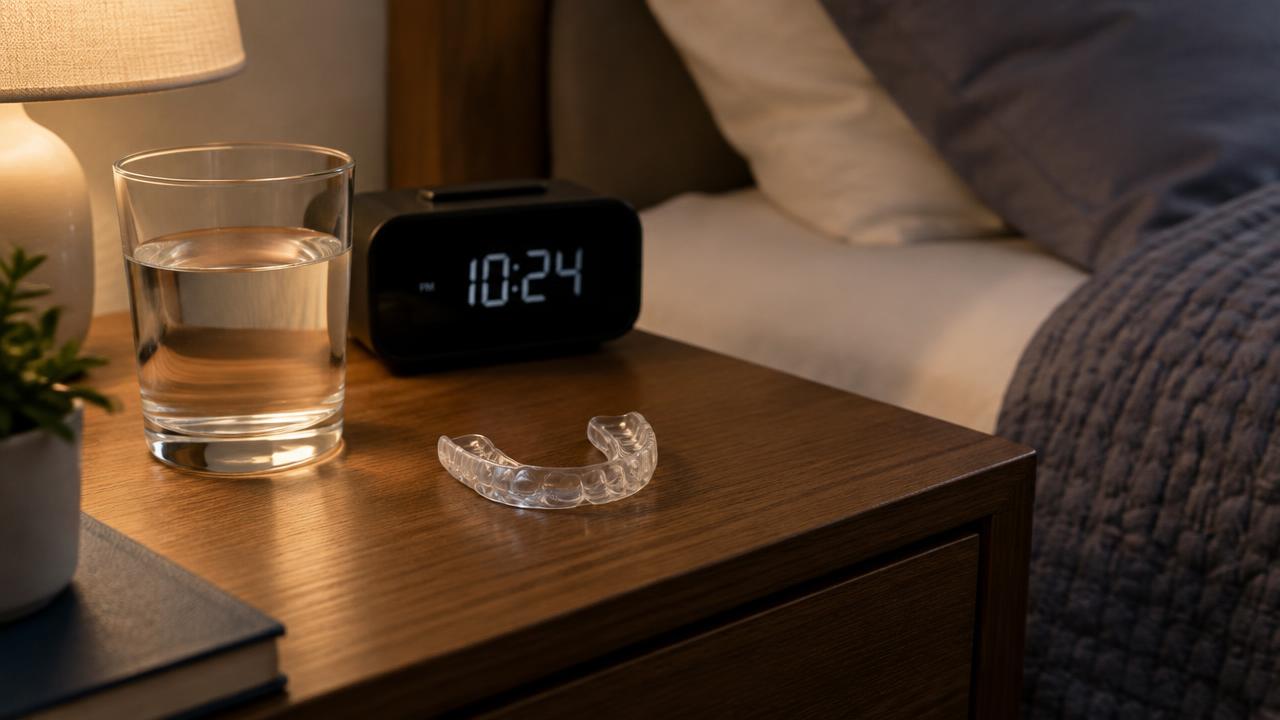
- A prescription or fitting record for an occlusal splint or night guard
- Notes documenting morning jaw soreness, temporal headaches, or masseter muscle tenderness
- Sleep study or sleep medicine records noting grinding observed during sleep
Where veterans start
Every case is different, and there is no obligation at any step. When veterans want to understand what their records actually support, these are the two most common starting points:
- Medical records review
A licensed physician reviews your records for a $250 flat fee and identifies which conditions the available evidence may support. The fee is refunded in full if nothing supportable is identified.
- Nexus letter
When the records support one, a licensed provider writes the medical opinion that addresses the link between your condition and your service or an already service-connected disability.
A night guard fitting is particularly useful evidence. It is dated, it is objective, and it usually predates the claim by years, which helps establish chronicity. If your dentist fitted you for a splint long ago, that record is worth locating.
Service connection for the teeth themselves
Here is the limit veterans need to know: under VA rules, treatable dental conditions like cavities and ordinary tooth loss are generally not service-connectable for compensation on their own, apart from narrow exceptions such as trauma in service. Tooth loss from an in-service jaw or facial injury is different and can be compensable under the dental and oral codes - the jaw fracture guide covers that.
Bruxism claims therefore live or die on the jaw and muscle component, not on the teeth alone.
Where a medical opinion fits
Because bruxism is the mechanism rather than the diagnosis, the medical opinion matters more here than in most claims. Someone qualified has to connect the service-connected condition, the clenching pattern, and the jaw damage into one explained chain. Without that, the VA sees a dental history with no link to service, and the claim fails on the nexus element the same way other claims do - see our guide on why VA claims get denied.
Where to go next
Read the pillar guide for the full claim structure, the rating code guide for percentages, and the evidence guide for what belongs in the file. If grinding is disrupting your sleep, our sleep apnea series is worth reading as well.